From ancient mystery to modern superfood
How is black garlic made?
Black garlic is simply regular white garlic that undergoes a long, natural fermentation process. The garlic cloves are placed in controlled conditions — elevated temperature and high humidity — for a period ranging from several weeks to even three months. During this time, the Maillard reaction occurs, meaning the slow “caramelization” of natural sugars and amino acids.
The result? The garlic cloves become soft, black, and free from the sharp smell and taste characteristic of fresh garlic. Instead, a deep aroma appears, reminiscent of smoked plum, liquorice, and some people even compare it to molasses or balsamic vinegar.
The miracle of S-allyl-L-cysteine and glutathione
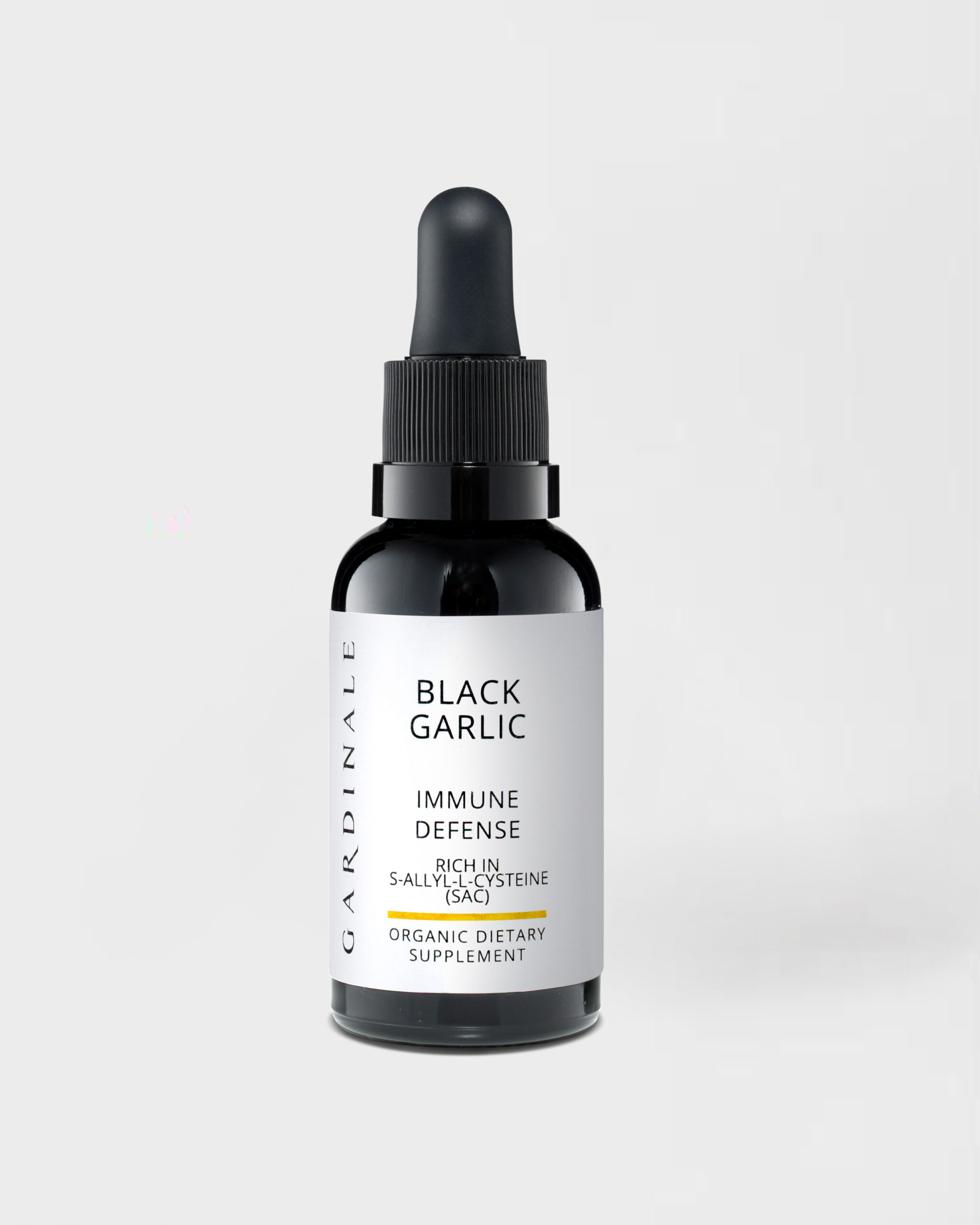
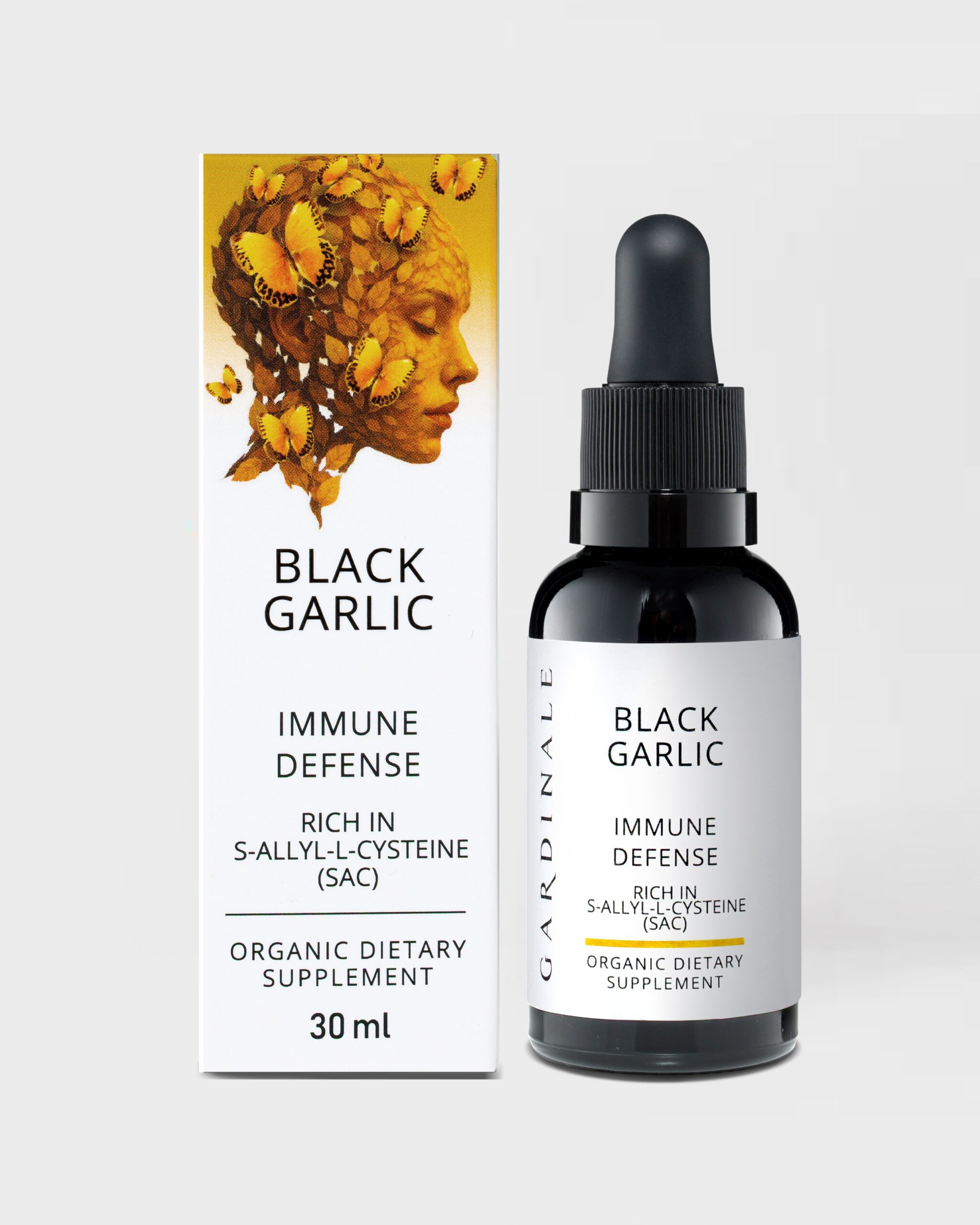
Fermentation causes a spectacular change in the chemical composition of garlic. One of the most important compounds formed during aging is S-allyl-L-cysteine (SAC) — a natural molecule that:
• acts as a powerful antioxidant,
• supports cellular regeneration,
• is a precursor of glutathione — the main antioxidant produced by our body, responsible for detoxification and protection against oxidative stress.
Glutathione is known as the “molecule of youth” — it neutralizes free radicals, supports the immune system, and slows down aging processes. This is why black garlic has gained immense interest in the context of anti-aging and health prevention.
A treasure of polyphenols and flavonoids
Fermentation gives black garlic a completely different profile of bioactive substances compared to fresh garlic. Research shows that:
• polyphenol levels increase as much as 9.3-fold,
• flavonoid levels increase by about 1.5-fold.
The extraction process further concentrates these compounds, making black garlic an exceptionally rich source of natural antioxidants.
History and recognition as functional food
Although in Europe black garlic is seen as something new, its tradition goes back thousands of years. In China and Korea, it was known in ancient times and used both as a health remedy and a culinary ingredient. Today it is recognized as functional food — meaning food that, besides its nutritional value, has scientifically confirmed effects supporting health.
In the kitchen and the home pharmacy
Today, black garlic has become a true culinary discovery. Top chefs use it in:
• sauces and marinades,
• meat and fish dishes,
• pastes, risottos, and even desserts.
Its velvety, slightly sweet flavor adds depth to dishes, and the absence of intense garlic odor makes it a universal addition.But black garlic is not only a culinary star. It is also a natural remedy supporting the body:
• strengthens immunity,
• supports heart and cardiovascular health,
• protects cells from oxidative stress,
• has anti-inflammatory effects.
Fun fact
In folk tradition, black garlic was used to alleviate the effects of excessive alcohol consumption. Research confirms that the compounds it contains reduce ethanol absorption and may speed up the return to sobriety.
Ancient method – modern discovery
Black garlic is an example of how old methods and traditional knowledge can return in a modern form. On one hand, it becomes an ingredient of sophisticated dishes in the best restaurants in the world, and on the other — it returns to home medicine cabinets as a natural way to support health and longevity.
Black garlic is more than a food product — it is a bridge between history and the present, between cuisine and medicine, between flavor and health.