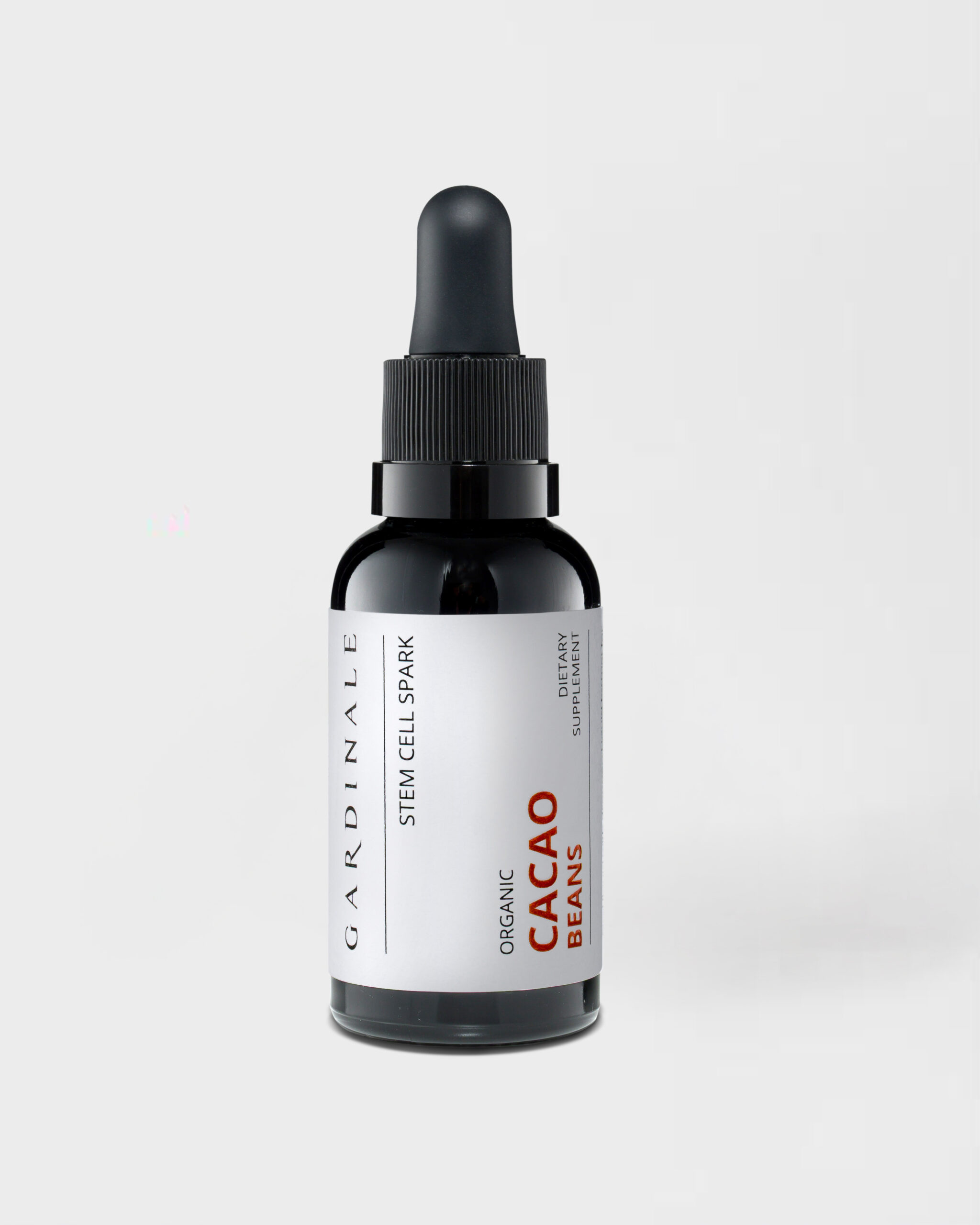
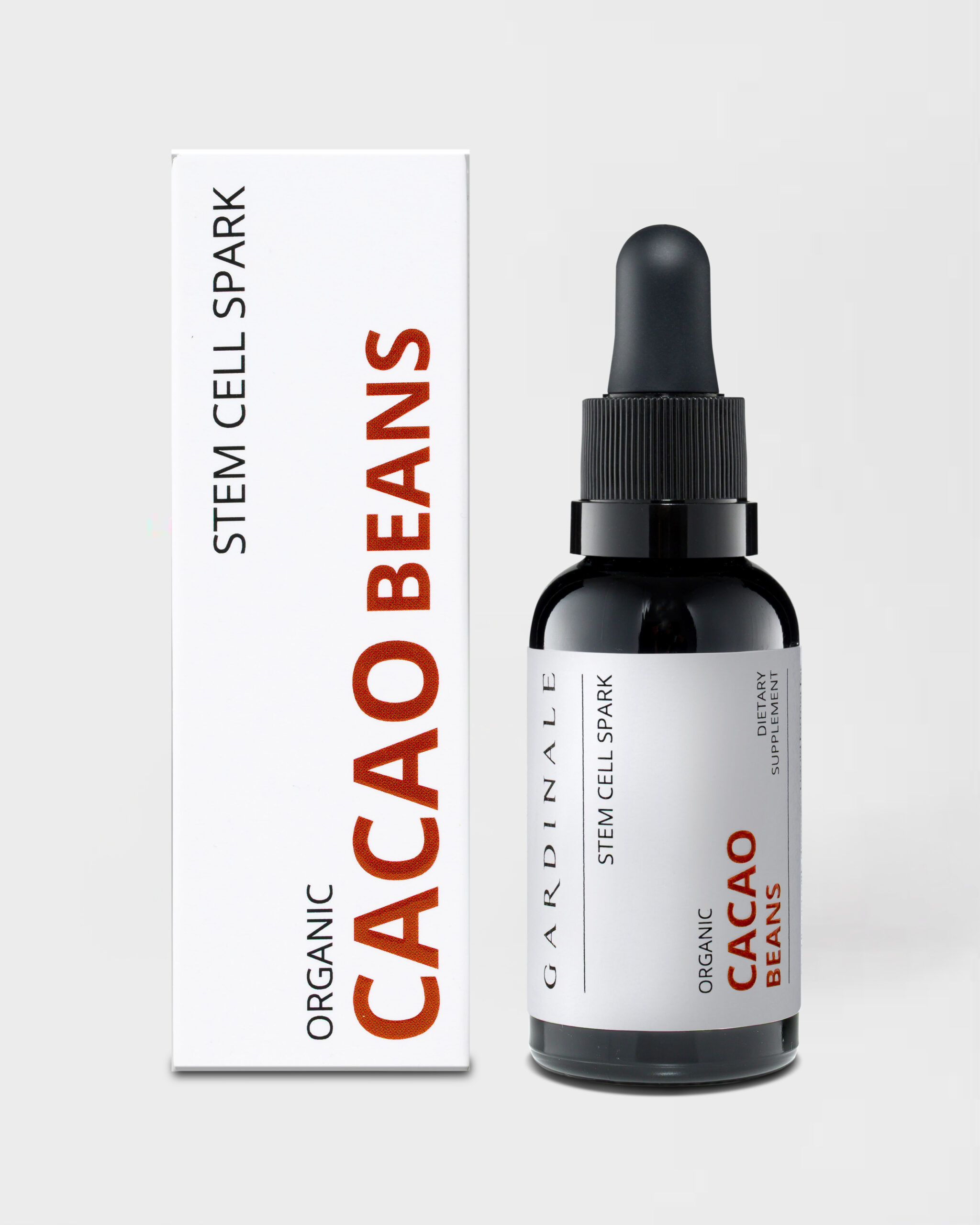
Cocoa – So familiar, but do we really know it?

When we think of cocoa, we usually picture a warm, aromatic cup of comfort. For children – a sweet delight, for adults – sometimes a return to carefree moments. But cocoa is much more than just a tasty drink. Within the cacao bean lies the history of cultures, economics, and above all – health.

Cocoa as the currency of life

Hundreds of years ago in Central America, cacao beans were literally used as currency. The Maya and Aztecs paid with them for goods and services, and the drink prepared from cocoa was reserved for warriors, priests, and nobles. What is a dessert for us was for them a source of strength, endurance, and mental clarity. Coincidence? Hardly.

Because in reality, health and time are the only true currencies we have. And cocoa, although today we mostly see it as a chocolate bar or sweet powder, has for centuries been a symbol of energy, longevity, and vitality.

Cocoa and stem cells – the secret of regeneration

Modern science is rediscovering what ancient civilizations sensed intuitively. Studies show that the bioactive compounds found in cocoa, especially flavonoids, may support the processes of formation and mobilization of stem cells. These cells are responsible for the body’s regeneration – they repair tissues, support immunity, and protect the heart and brain. In other words: cocoa has the potential not only to improve well-being but also to support natural rejuvenation mechanisms.

Cocoa in tradition and modernity

It’s no coincidence it was once called “the food of the gods.” Cocoa supports concentration, improves mood, reduces stress, and thanks to theobromine – stimulates, but more gently than coffee. Modern studies confirm its role in improving circulation, protecting the heart, and supporting cognitive functions.

Cocoa powder vs. extract – an essential difference

For many people, “cocoa extract” simply means regular cocoa powder. But that is not the case. Cocoa powder is produced after defatting and grinding the beans – it contains part of the bioactive compounds, but loses intensity and fullness of action. Extract, on the other hand, is a concentrated form – isolated in a way that preserves the most important compounds: flavonoids, polyphenols, and caffeine in much higher concentrations. This is what makes cocoa extract not just a “flavor,” but real support for the body.

Cocoa – pleasure that heals

Delicious, aromatic, soothing – and at the same time holding extraordinary power. Cocoa is not just a childhood drink but one of the oldest and most valuable gifts of nature. And although today we can enjoy it in many forms – from a cup of hot drink to concentrated extract – one thing remains unchanged: cocoa hides the magic of health.

Other articles

PL-EKO 07

VEGAN 

GLUTEN FREEE

NO GMO

E-FREE

100% NATURAL

 ZERO WASTE

ZERO PRESERVATIVES

24 MONTH VALIDITY PERIOD

Join our community
Receive the latest updates on our health innovations and exclusive offers from Gardinale.

GARDINALE Sp. z o.o.
SCIENCE AND TECHNOLOGY PARK
ul. Mościckiego 1,
24-110 Puławy
POLAND
team@gardinale.com

Polityka Osobowych

1. Administrator danych

The controller of Customers’ personal data is:
Gardinale Spółka z ograniczoną odpowiedzialnością (limited liability company)
ul. Ignacego Mościckiego 1, 24-110 Puławy, Poland
E-mail: team@gardinale.com | Tel.: +48 883 255 355

2. Cel i podstawa prawna przetwarzania danych

Personal data is processed for the following purposes:
Fulfilling the sales contract (Article 6, Section 1, Letter b of the GDPR).
Managing the user account (optional) and enabling the use of order history.
Handling complaints and returns.
Sending commercial information only after consent (newsletter).

3. Zakres przetwarzanych danych

• Name and surname
• Email address
• Shipping address
• Phone number
• Order history
• Password (encrypted, non-recoverable)
Note : A user account is optional – purchases can be made without registration.

4. Udostępnianie danych

Dane mogą być przekazywane wyłącznie:
• operatorowi płatności (mBank S.A.),
• firmom kurierskim do realizacji wysyłki,
• podmiotom obsługującym księgowość i obsługę zamówień.

5. Okres przechowywania danych

Dane związane z realizacją zamówienia: przez okres niezbędny do realizacji zamówienia i zgodnie z obowiązującymi przepisami podatkowymi.

Konto użytkownika: przez czas aktywności  konta lub do momentu jego usunięcia.

6. Prawa Klienta

Każdy klient ma prawo do:
Dostępu do swoich danych i ich kopii.
Sprostowania danych.
Usunięcia danych („prawo do bycia zapomnianym”).
Ograniczenia przetwarzania danych.
Przenoszenia danych.
Wniesienia skargi do organu nadzorczego (PUODO w Polsce).

7. Środki bezpieczeństwa

Hasła kont są przechowywane w formie zaszyfrowanej.
Dane przesyłane przez formularze kontaktowe i zamówienia są szyfrowane protokołem SSL.
Sprzedawca stosuje procedury ochrony danych zgodne z RODO.

8. Cookies i podobne technologie

Pełna polityka cookies poniżej.

Polityka Cookies

1. Co to są pliki cookie

Cookies are small text files stored on the Customer’s device in order to:
improve the functionality of the website,
analyze traffic,
and maintain the user’s session (e.g., a logged-in account).

2. Rodzaje plików cookie używanych w sklepie

Niezbędne – umożliwiają korzystanie ze sklepu i realizację zamówień.
Funkcjonalne – pozwalają zapamiętać ustawienia i język strony, utrzymanie sesji konta.
Analityczne i marketingowe – wykorzystywane do analizy ruchu i przyszłych działań marketingowych (w przyszłości: GA, Meta Pixel itp.).

3. Zgoda na pliki cookie

Korzystając ze strony, Klient wyraża zgodę na używanie plików cookie zgodnie z polityką.
Klient może w każdej chwili zmienić ustawienia w przeglądarce lub poprzez baner cookie na stronie.

4. Przechowywanie danych

Cookies are stored for a maximum of 12 months or until they are deleted by the user.

5. Zarządzanie cookie

Customers can disable cookies in their browser settings at any time, or
delete existing cookies.
Disabling cookies may limit the store’s functionality (eg, loss of account sessions).

Przegląd prywatności

Yes, website owners are obliged to inform users about cookies and obtain consent to their use, especially analytical and marketing ones, as required by the GDPR and the Telecommunications Law (Article 173). Failure to comply with this obligation may result in high financial penalties (up to EUR 20 million or 4% of turnover) and loss of trust. A transparent notification (banner) and the possibility of user choice (consent, rejection, customization) are required.Obligation and legal basisGDPR (General Data Protection Regulation): Requires the processing of personal data in accordance with the principles of transparency and consent.Telecommunications Law (Article 173): Requires information about cookies and obtaining consent (or enabling its change through browser settings).What you need to do on the websiteNotification (Banner): Display a clear banner with information about cookies, the purpose of their use, selection options and the possibility of withdrawing consent.Consent: Users must provide informed consent to cookies that are not necessary for the basic operation of the site (e.g., analytical, marketing).User Options: Provide the ability to accept all, reject or adjust cookie settings (e.g., only necessary cookies).Privacy Policy: Provide easy access to a detailed Privacy Policy.Ongoing requirement: The notification should be visible and the ability to manage consent should be easy, e.g., through a permanent icon on the website.Consequences of non-complianceFinancial penalties: Up to EUR 20,000,000 or 4% of annual global turnover (GDPR), as well as up to 3% of revenue (Telecommunications Law).Loss of trust: Negatively affects the image and traffic of the website.SummaryVirtually every website using analytical, advertising, or content personalization tools must have a properly implemented cookie notification and consent mechanism, which is a legal requirement.