Check your cart contents (0)
Your cart is empty.
Back to shop
How is black garlic made?
Black garlic is nothing more than regular white garlic that undergoes a long process of natural fermentation. Garlic cloves are placed in controlled conditions – at elevated temperature and high humidity – for a period ranging from several weeks up to three months. During this time, the Maillard reaction occurs, meaning the slow “caramelization” of natural sugars and amino acids.
The result? The garlic cloves become soft, black, and free from the sharp smell and taste characteristic of fresh garlic. Instead, an aroma appears that resembles smoked plum, licorice, and some even compare it to molasses or balsamic vinegar.
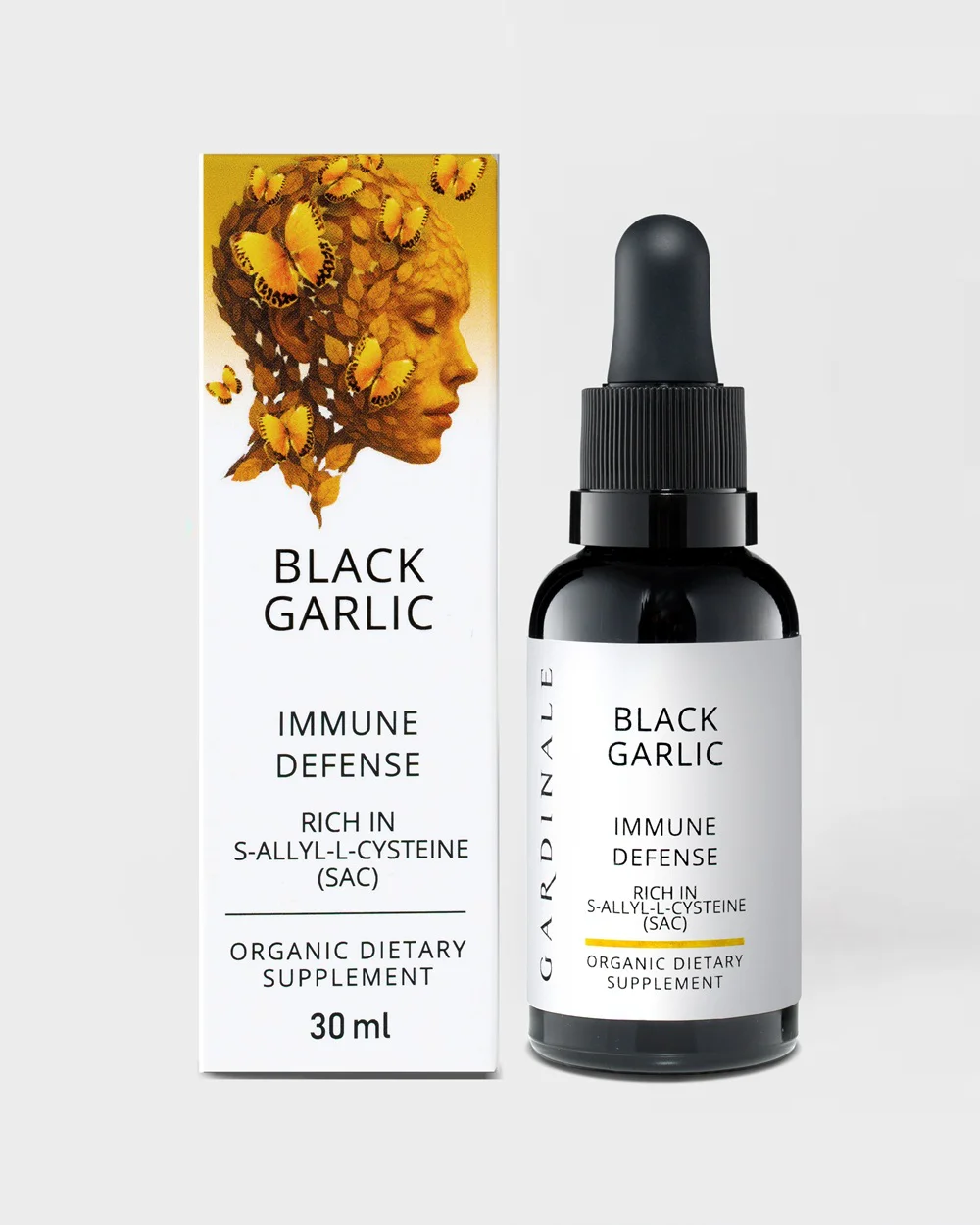
The miracle of S-allyl-L-cysteine and glutathione
During fermentation, a spectacular change in the chemical composition of garlic takes place. One of the most important compounds formed in the aging process is S-allyl-L-cysteine (SAC) – a natural substance that:
• acts as a powerful antioxidant,
• supports cell regeneration,
• and most importantly is a precursor of glutathione – the main antioxidant produced by our body, responsible, among other things, for detoxification and protection against oxidative stress.
Glutathione makes our immune system stronger. Glutathione is naturally produced in cells. Supplementing it externally is of course beneficial, but its bioavailability is relatively low. The best way to increase glutathione levels is to stimulate the body to produce it. It is S-allyl-L-cysteine that activates glutathione production in the body, strengthening the immune system.
Glutathione is called the “molecule of youth” – it participates in neutralizing free radicals, supports the immune system, and slows down the aging process. This is why black garlic has gained enormous interest in the context of anti-aging and health prevention.
A treasure trove of polyphenols and flavonoids
Fermentation gives black garlic a completely different profile of bioactive compounds than fresh garlic. Studies show that:
• polyphenol levels increase up to 9.3 times,
• flavonoid content increases by approximately 1.5 times.
The extraction process further concentrates these compounds, making black garlic an exceptionally rich source of natural antioxidants.
History and recognition as a functional food
Although black garlic is considered a novelty in Europe, its tradition dates back thousands of years. In China and Korea, it was already known in ancient times and used both as a health-supporting agent and as a culinary ingredient. Today, it is recognized as a functional food – meaning one that, beyond nutritional value, also has proven health-supporting properties.
In the kitchen and in the medicine cabinet
Today, black garlic has become a true culinary discovery. Top chefs use it in:
• sauces and marinades,
• meat and fish dishes,
• pastas, risottos, and even desserts.
Its velvety, slightly sweet taste gives dishes depth, and the lack of an intense smell makes it a versatile ingredient.
But black garlic is not only a culinary star. It is also a natural agent supporting the body:
• strengthens immunity,
• supports heart and cardiovascular health,
• protects cells against oxidative stress,
• has anti-inflammatory effects.
Fun fact
In folk tradition, black garlic was used as a remedy to alleviate the effects of excessive alcohol consumption. Studies confirm that compounds contained in it reduce ethanol absorption and may accelerate sobering up.
An old method – a modern discovery
Black garlic is an example of how ancient methods and traditional knowledge can return in a modern form. On one hand, it becomes an ingredient of refined dishes in the world’s best restaurants; on the other, it returns to home medicine cabinets as a natural way to support health and longevity.